Periodontal Care
Gum Disease Treatment
Healthy gums are the foundation of every smile. Our periodontist and hygiene team work together to diagnose, treat, and manage gum disease, from early-stage inflammation to advanced bone loss.

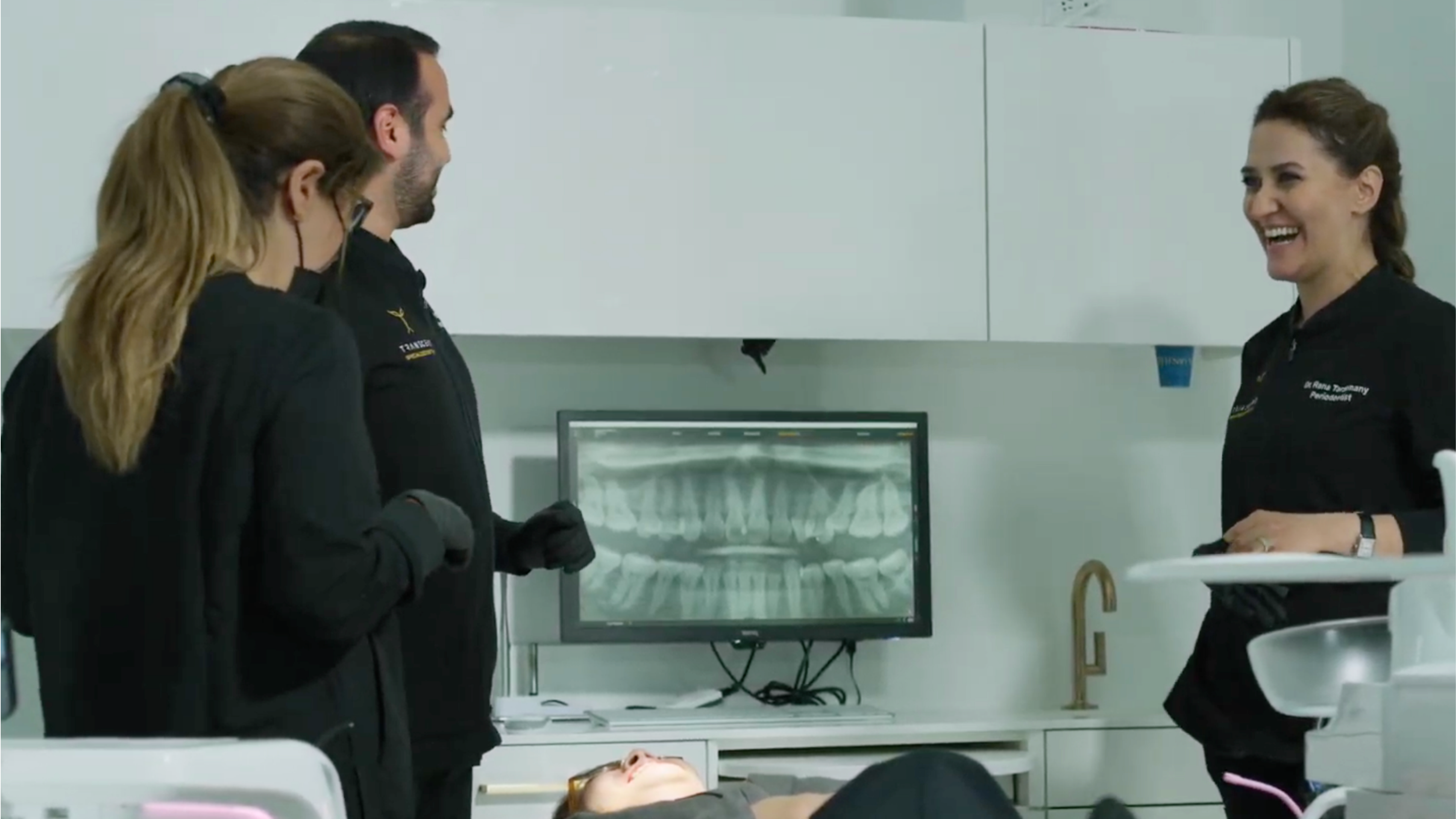
Our Approach
Specialist and Hygiene Team, Working Together
At Transcend, gum disease treatment is led by our periodontist, a specialist whose entire focus is the health of the tissue and bone that support your teeth. But treatment doesn't happen in isolation.
Our periodontist works closely with our hygiene department, who play a critical role in the day-to-day management of your gum health. Together, they assess your condition, carry out treatment, and monitor your progress over time.
For patients planning cosmetic or restorative work, whether veneers, implants, or a full reconstruction healthy gums aren't optional. They're the starting point.
How It Works
A Phased Approach
Periodontal Evaluation
Our periodontist performs a full assessment of your gum health, measuring pocket depths, evaluating bone levels, and identifying the extent and pattern of disease.
Non-Surgical Treatment
We typically begin with non-surgical therapy: deep debridement and multiple cleaning sessions with our hygiene team, often combined with medication therapy to reduce bacteria and inflammation.
Re-Evaluation & Next Steps
After the initial phase, our periodontist re-evaluates your progress. Based on the response, the next step may be continued hygiene therapy, or if needed, surgical intervention such as pocket reduction surgery.
What We Offer
Treatment Options
Professional Cleaning & Airflow Therapy
Our hygiene team uses airflow technology, a combination of air, water, and fine powder, to gently and thoroughly remove plaque, staining, and biofilm from tooth surfaces and below the gum line. It's more comfortable than traditional scaling for many patients, and effective at reaching areas that are difficult to clean with conventional instruments alone.
Deep Cleaning (Scaling & Root Planing)
For patients with deeper gum pockets and buildup below the gum line, scaling and root planing is a more thorough cleaning that removes tartar and bacteria from the root surfaces. This helps the gums reattach to the teeth and reduces pocket depth over time.
Medication Therapy
In some cases, locally delivered antibiotics like Arrestin are placed directly into gum pockets after cleaning. The medication works over time to reduce bacteria and inflammation in areas that are difficult to reach with cleaning alone. An effective complement to mechanical treatment.
Laser-Assisted Therapy
Laser technology targets infected tissue with precision, removing bacteria and diseased tissue while preserving healthy structures. Often results in less discomfort and faster recovery compared to traditional surgical methods.
Regenerative Procedures
When gum disease has caused bone loss, regenerative techniques using bone grafts, membranes, and growth factors can help rebuild the supporting structures around your teeth. Our periodontist evaluates whether regeneration is possible in your case and what outcomes you can realistically expect.
Ongoing Maintenance
Gum disease is manageable but requires consistent follow-up. After active treatment, we establish a maintenance schedule, typically every three to four months initially, with our hygiene team monitoring your gum health and our periodontist adjusting the plan as needed.
Common Questions
Good to Know
How do I know if I have gum disease?
Bleeding when you brush or floss, persistent bad breath, gum recession, or teeth that feel loose are common signs. But gum disease can also progress without obvious symptoms, which is why regular periodontal evaluations matter.
Why see a periodontist instead of a general dentist?
A periodontist completes years of additional training focused exclusively on gum tissue and the bone that supports your teeth. For moderate to advanced gum disease, or cases that haven't responded to initial treatment, specialist care makes a meaningful difference.
Is treatment painful?
Modern techniques and proper anesthesia make treatment far more comfortable than most patients expect. Deep cleanings may cause some sensitivity, but most patients find the process very manageable.
Can lost bone grow back?
In many cases, regenerative procedures using bone grafts and growth factors can help rebuild bone that's been lost. The extent depends on the pattern and severity. Our periodontist will be straightforward about what's realistic for your case.
How often will I need maintenance visits?
Typically every three to four months initially, then adjusted based on how your gums respond. Gum disease is manageable with consistent care. Maintenance visits are what keep it from coming back.
Why does gum health matter for cosmetic work?
Gum disease undermines the foundation that supports your teeth. Placing veneers, crowns, or implants on compromised gums is like building on unstable ground. Treating gum disease first ensures your investment lasts.
Protect What Matters
Healthy gums are the foundation of a lasting smile. Let's start with an assessment and a clear path forward.
Explore Related Services