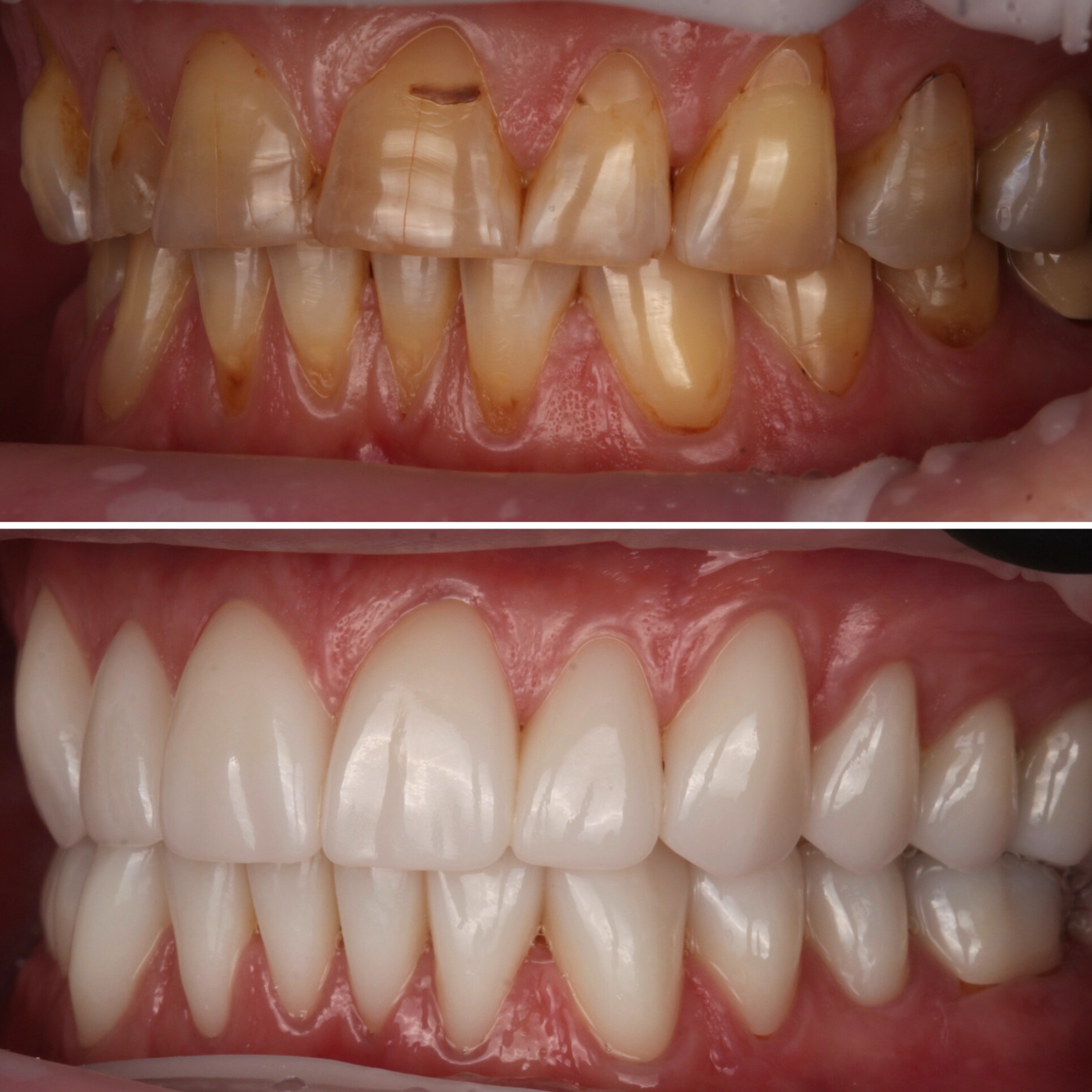
Why this article exists
Choosing a cosmetic dentist is one of the more consequential aesthetic decisions you'll make in a lifetime, and most patients don't approach it with the rigor it deserves. The default path is some combination of Instagram, online reviews, and whichever clinic is closest to home. Those tools reliably surface the dentists who are best at marketing. They are far less reliable at surfacing the dentists who are best at this specific work.
Cosmetic dentistry is also one of the few medical fields where the difference between an exceptional result and an average one is largely invisible to the patient until they're already living with it. By the time most people realize their smile wasn't designed by an artist's eye, the porcelain is already bonded in.
This is what we tell every patient who asks how to evaluate a cosmetic dentistry practice, including our own. The aim is not to convince you to choose us. It's to give you the filters that let you choose anyone well, so the patient who is right for our practice can find us, and the patient who is right for someone else's can find them.
You're not choosing a dentist. You're choosing an eye.
Cosmetic dentistry is closer to portraiture than to carpentry. The technical part matters and has to be right. The bonding, the preparation, the materials all have to be done well. But two clinicians can be equally competent at the technical work and produce strikingly different results, because what really separates a great cosmetic case from an average one is taste. The shape of the teeth. The way they relate to the lips and the rest of the face. The subtle variation between one tooth and the next that makes a smile look like it grew there, rather than like it was installed.
Beauty is subjective. The artist isn't. You can't fully evaluate your own outcome until you're living with it, so the real decision is made earlier, when you choose the clinician. Before you sit in anyone's chair, you have to learn to read their portfolio the way you'd read a wedding photographer's portfolio before booking them, or an architect's before building a house with them.
The honest version of this advice is that you are picking someone's aesthetic sensibility for your face. The technical credentials are necessary but not sufficient. The eye matters more than anyone tells you up front.
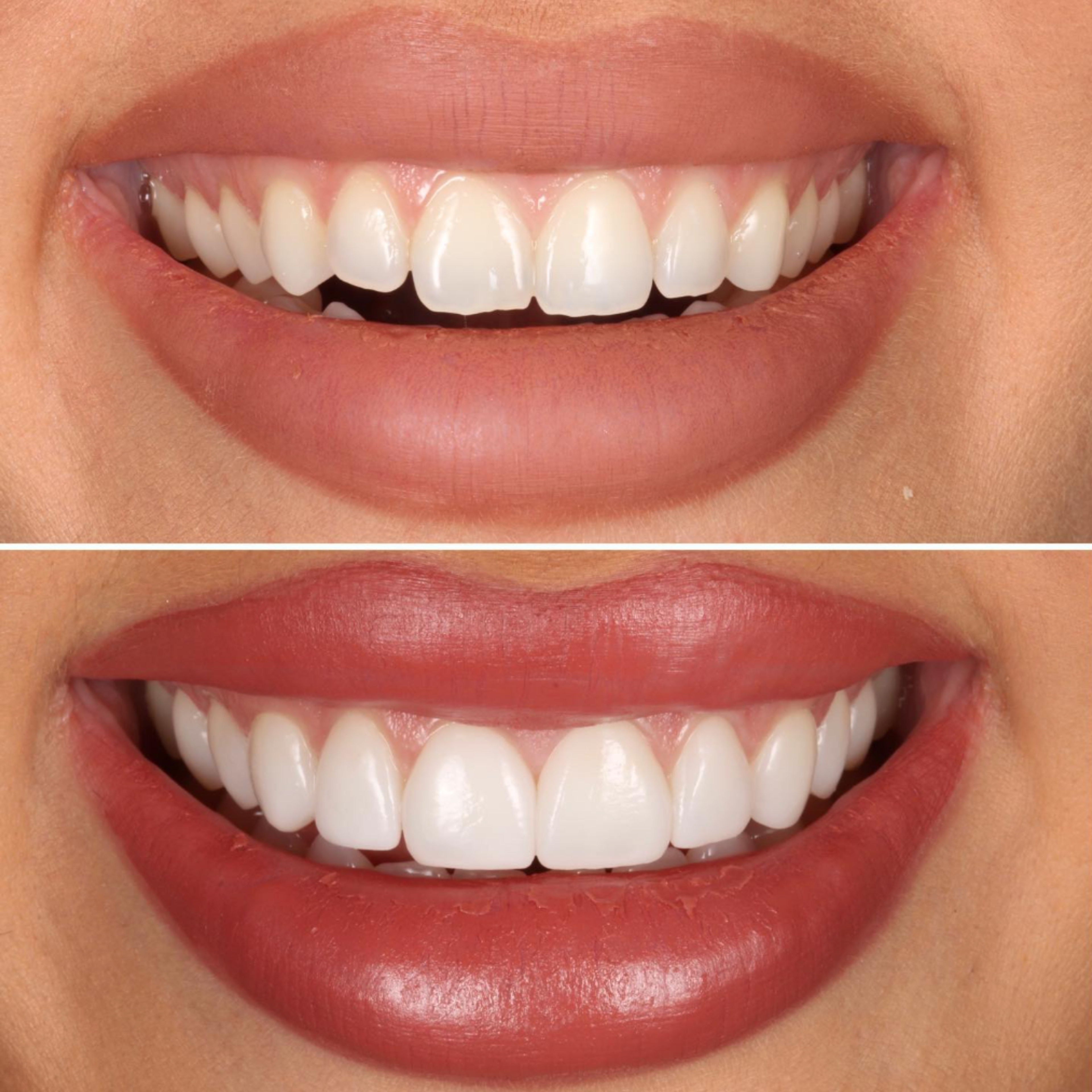
How to read a portfolio
Almost every cosmetic dentist's website shows before-and-after photos. Most patients glance at a few, decide they look nice, and move on. That isn't reading a portfolio. That's looking at marketing.
Quantity. Ten cases is a token. Fifty is meaningful. A few hundred is a body of work. A clinician who has done this every day for years should have an enormous library of cases to show you. If the portfolio is small, it's worth asking why.
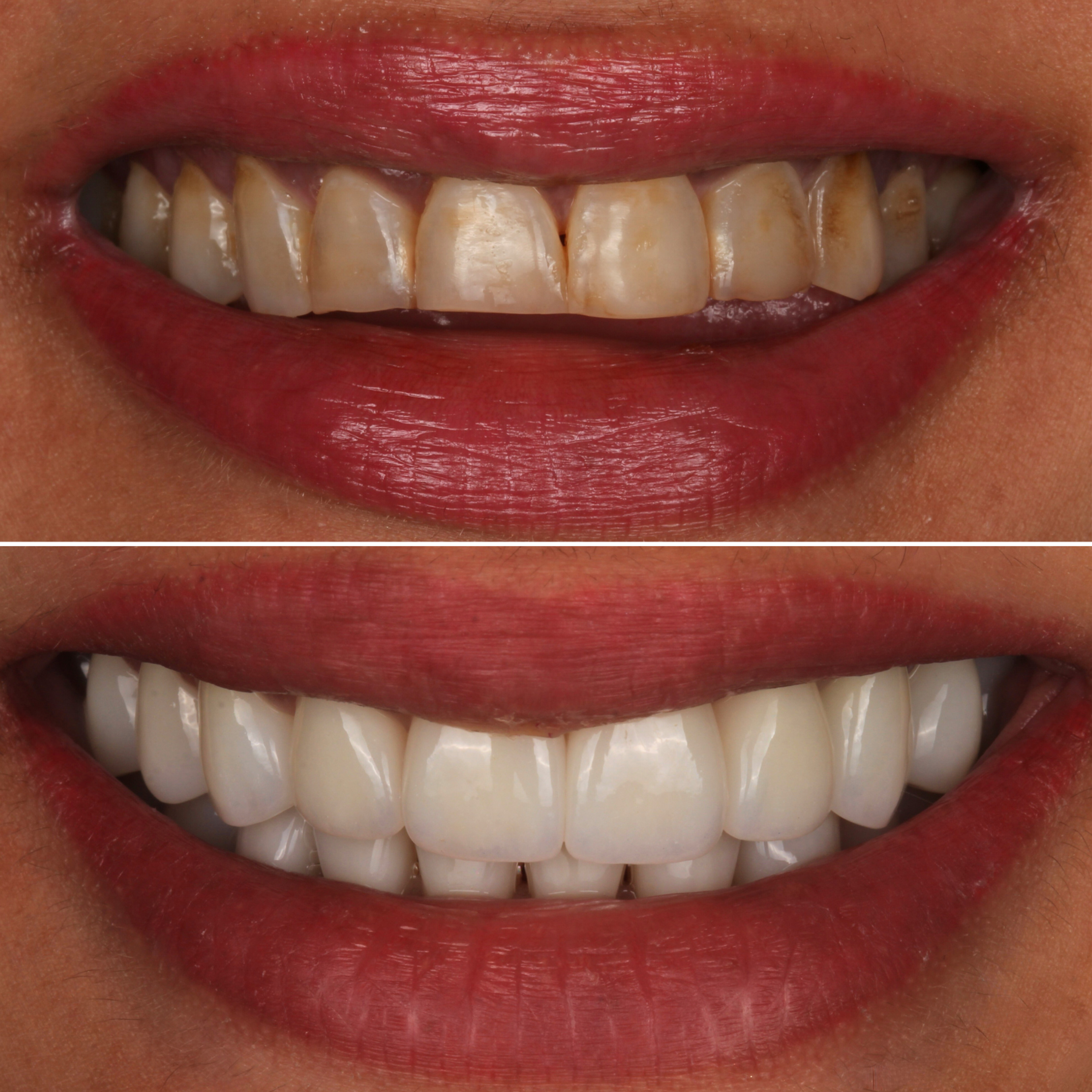
Variety. Watch for whether the cases shown are all the same kind of patient: young, photogenic, with already-good underlying anatomy. Anyone can make a 24-year-old's smile look great. The cases worth seeing are the ones with worn teeth, dark teeth, crowded teeth, old restorations being replaced, single-tooth matches against natural neighbors. Range tells you whether the clinician can handle the case in front of you, not just the case that looks good in their feed.
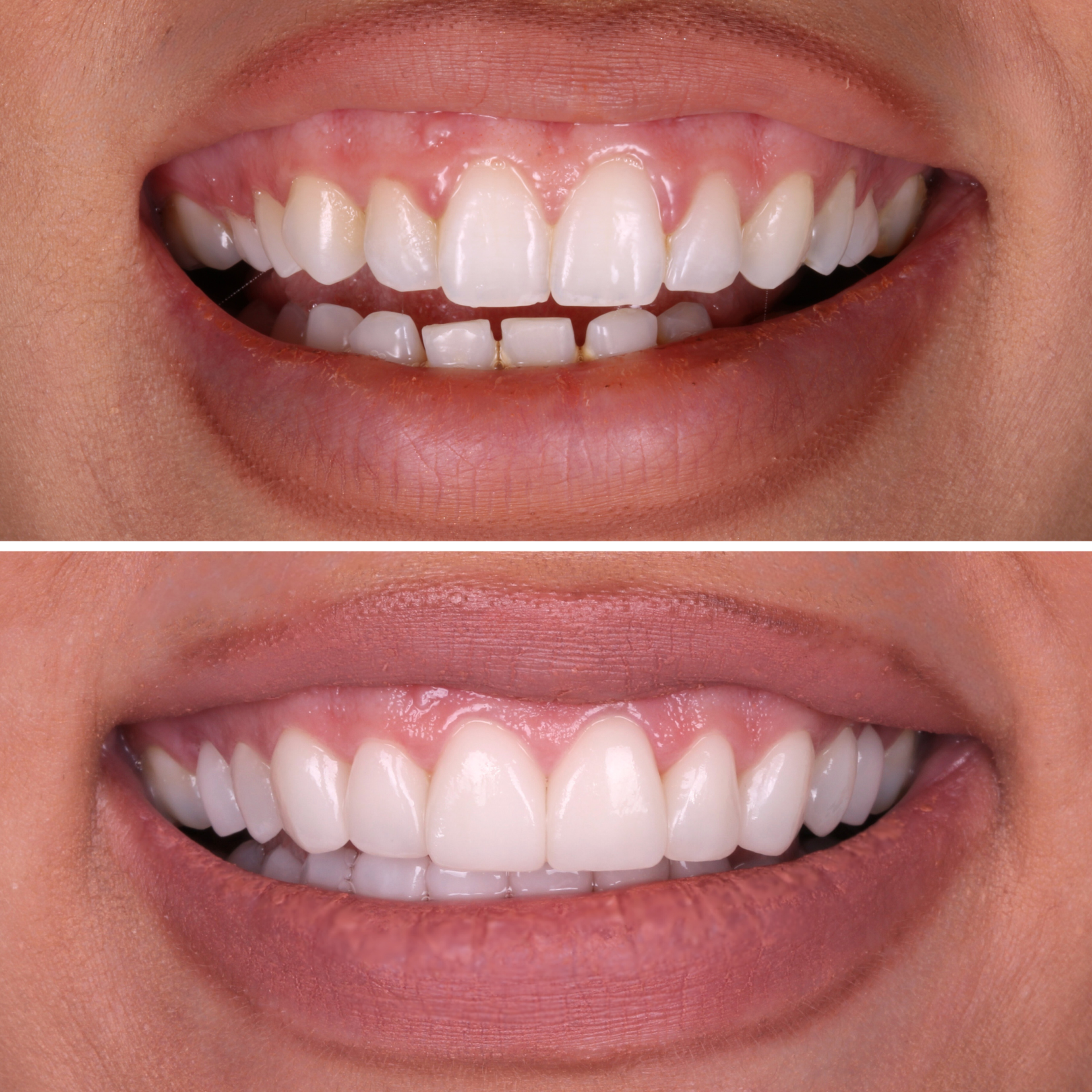
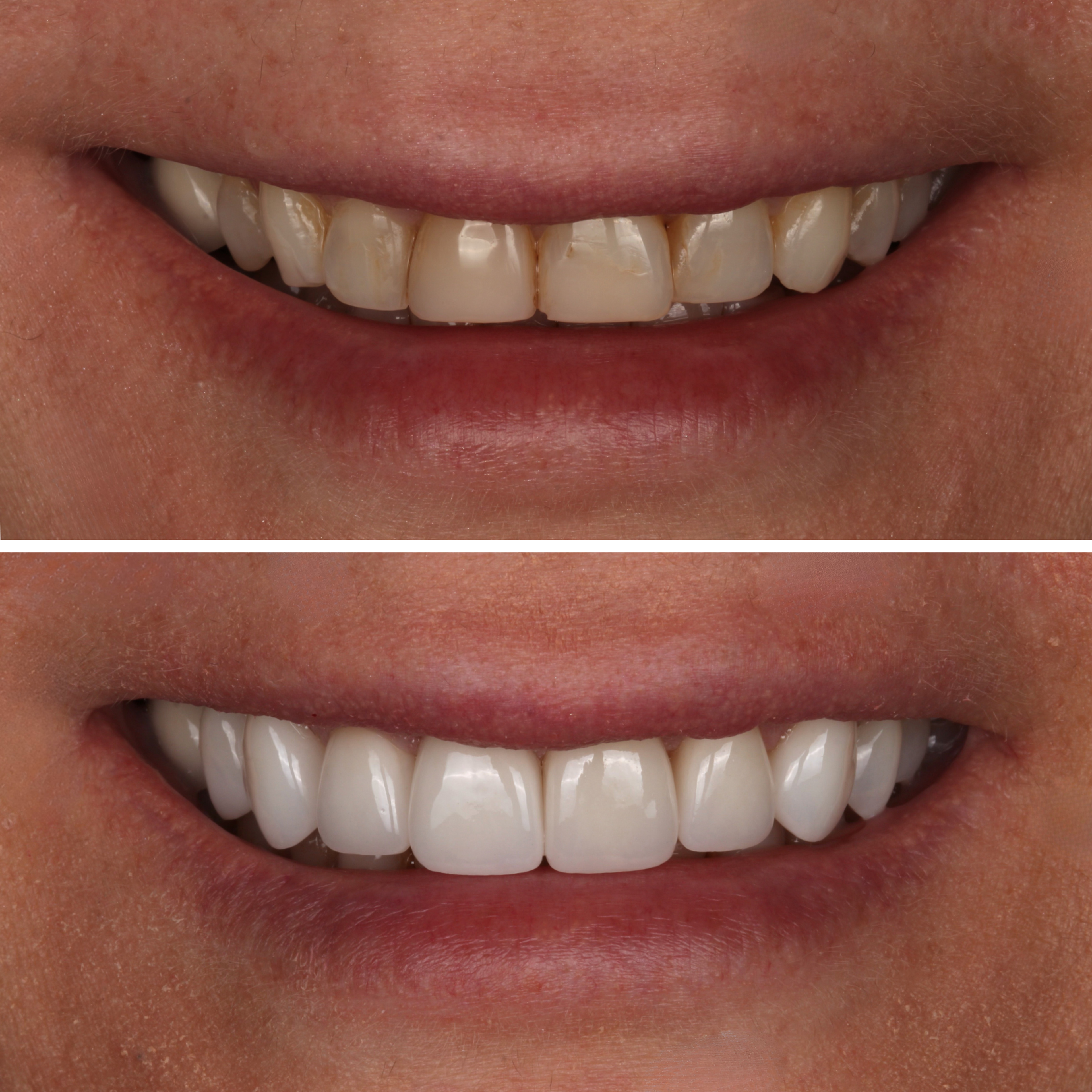
Same angle, same lighting. Real before-and-afters are shot in the same conditions. Same camera angle, same lip retraction, same light. When the lighting changes between the before and the after, or when the before is a wide candid shot and the after is a styled close-up, the photos are doing some of the work the porcelain is supposed to do.
Full smile and close-up. You want to see both. The full smile tells you whether the design fits the face. The close-up tells you whether the porcelain has the surface anatomy, translucency, and individuality of natural teeth, or whether it's the uniform, glassy look that gives cosmetic dentistry a bad name. If a portfolio only shows wide shots, the close-up detail probably isn't there.
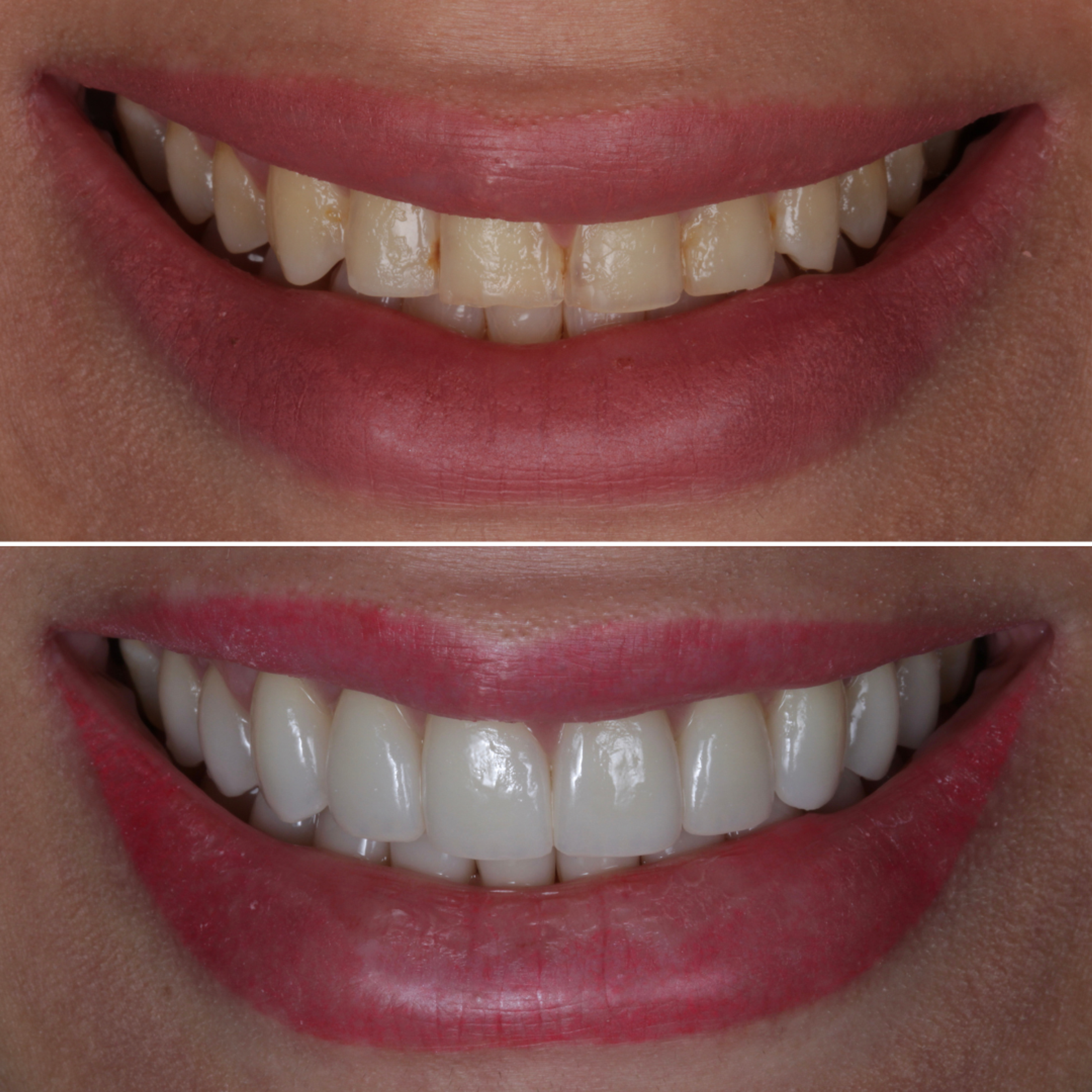
If a clinic resists showing you a larger portfolio when you ask, or if the cases on display feel curated to hide rather than to demonstrate, that itself is information.
Specialty actually matters in this field
Prosthodontics is the dental specialty recognized for cosmetic and reconstructive work. In Canada, prosthodontists hold the FRCD(C) credential — Fellow of the Royal College of Dentists of Canada in Prosthodontics — earned through additional years of post-doctoral training and rigorous board examination focused entirely on cosmetic, restorative, and reconstructive dentistry. General dentists can legally perform cosmetic procedures. The question isn't who's allowed to. It's who has spent the most years training specifically on this kind of work.
It's the equivalent of choosing a plastic surgeon over a general surgeon for an aesthetic procedure. Both can technically do it. The specialist has spent years training for it.
Not every cosmetic case requires a specialist. A single chip, a small filling, a clean veneer on a patient with ideal anatomy can be done beautifully by an experienced general dentist. The case for a specialist gets stronger as the case gets harder: full smile makeovers, multiple teeth, complex bites, redoing someone else's work, matching a single tooth to natural neighbors, full-mouth reconstructions. The harder the case, the more the depth of training matters.
If you're seeing a clinician who isn't a prosthodontist for significant cosmetic work, that isn't automatically disqualifying. It does mean the rest of the filters in this article matter more. The specialty credential is one signal. The portfolio, the volume of cases, the lab relationship, and peer recognition are the others. The fewer of these a clinician has, the more weight the remaining ones carry.
Frequency: this can't be a side practice
Cosmetic dentistry rewards repetition. The eye sharpens with cases. The lab relationship deepens. The thousand small decisions that go into a great result, things like shade nuances, contour preferences, where to add subtle texture, when to push back on a patient's request, become second nature only after thousands of cases.
A general dentist who does a cosmetic case occasionally between fillings and cleanings is not in the same league as a clinician whose practice is built entirely around this work. It isn't a question of intelligence or ability. It's a question of how often the muscle has been used. The honest question to ask any clinician you're considering is what percentage of their practice is cosmetic, and how many veneer cases they do in a typical month. A clinician doing this daily will answer easily. A clinician for whom cosmetic is a side practice will hedge.
A related signal is who travels to the clinician. A practice with patients flying in from other provinces or other countries is one indicator that the clinician's reputation has outgrown their local market. People don't get on planes for routine work. They do it when they believe what they want done can't be done as well closer to home. At Transcend Specialized Dentistry in downtown Vancouver, patients arrive from across British Columbia and Alberta, from the prairies and Ontario, from the Maritimes and the northern territories, from much of the United States, and occasionally from Europe and the Middle East. The geography itself is one of the signals we look at.
Who else is the dentist accountable to?
A dentist who only sees their own patients is accountable only to those patients. That's a low bar. The clinicians whose work holds up are the ones whose work is also seen, evaluated, and challenged by their peers.
Teaching positions matter. A clinician who holds a faculty appointment at a university dental school is being evaluated by the institution and by their students every day. Teaching is hard to fake. Either the work stands up to scrutiny from peers and trainees or the appointment doesn't continue.
Peer-reviewed publishing matters. When a clinician's case work, technique, or research is published in journals like the Journal of Prosthodontics, the Journal of Prosthetic Dentistry, the Journal of Oral Sciences, or Dentistry Today, it has been read, evaluated, and accepted by other specialists. The bar for publication is the bar of the field, not the bar of marketing copy.
Lecturing at major conferences matters. Cosmetic dentistry has a global lecture circuit: the Pacific Dental Conference, Ontario Dental Association meetings, JDIQ in Quebec, the Greater New York Dental Meeting, the American College of Prosthodontists Annual Session, the Chicago Midwinter Meeting, the Canadian Academy of Restorative Dentistry and Prosthodontics, and many others. Clinicians invited repeatedly to speak at these are clinicians whose technique, results, and judgment are considered worth teaching to other dentists.
Continuing education leadership matters. Clinicians who run continuing education programs for other dentists are training the next generation of this work. That role doesn't exist if peers haven't decided the clinician's approach is worth learning from.
When you look at a clinician's biography, set the marketing language aside. Look at the verifiable things: faculty appointments, journal publications, conference lectures, continuing-education leadership. These are the signals that the work has been seen by people who would know if it didn't hold up.
The lab. Who is actually making the veneers?
Most patients don't know that veneers and crowns are not made by the dentist. They're made by ceramists, the artisans who craft the porcelain, layer it, shade it, and shape it. The dentist designs the case and prepares the tooth. The lab team builds the actual restoration. The aesthetic result is a partnership.
Two things follow from this. First, the quality of the ceramists matters as much as the quality of the dentist. A great clinician working with an average lab will produce average results. Second, the relationship between dentist and lab matters. A dentist who has worked closely with the same ceramists for years, who can walk into the lab, look at a case in progress, and adjust a contour together, produces fundamentally different work than a dentist who sends impressions to a faceless lab and accepts whatever comes back.
Some clinics have an in-house lab. Most don't. In-house isn't strictly required to do excellent work, but it changes what's possible. When the ceramists are in the same building, the case can be evaluated together at every stage. Adjustments happen the same day instead of after weeks of shipping. The patient can be part of the conversation. The ceramists can meet the patient, see their face, hear what they want, and design with all of that in mind rather than only with photographs and a stone model.
When a clinic claims to "work with the best lab in the country," there are concrete ways to verify it. Ask who specifically makes the porcelain, by name, not just by the name of a lab company. Ask how the dentist communicates with them. Ask how adjustments are handled when something isn't right at try-in. Ask whether the lab team has met patients before, or whether the case is run through paperwork only. The answers separate clinics where the lab partnership is real from clinics where it's a line in the marketing.
The strongest single signal: other dentists as patients
The single strongest indicator that a clinic does this work well is whether other dentists choose it for their own cosmetic treatment. If you only remember one filter from this article, make it this one. Ask who the dentist's own patients are.
Dentists know who in their own profession actually does this work well, in a way no website or review platform can capture. They have seen each other's cases. They have evaluated each other's outcomes for years. When a dentist needs cosmetic work on their own teeth, or on the teeth of their spouse, their parents, their children, they choose with that knowledge. It is the most informed dental decision any patient ever makes.
A clinic that frequently treats other dentists as patients has cleared a bar that marketing cannot clear. It is a peer endorsement made with full information and full stakes. Treating other dentists is one of the most consistent patterns in our practice. Dentists from across Canada come to us for their own veneers, their own reconstructions, their own complex cases. So do executives whose schedules demand the workflow be efficient and predictable. So do public figures, performers, and athletes whose careers depend on how their smile photographs and holds up over time. We don't publicize names, and most of those patients prefer it that way. The pattern itself is the signal.
If you are considering a clinic, you are allowed to ask a version of this question directly. "Do other dentists come to you for their own cosmetic work? How often?" A clinician who can answer that honestly with a yes has been vetted by the only audience whose vetting really counts.
Specialization in action: a case that proves the point
Some cases make the case for specialization on their own. A patient came to us a few months after having twenty porcelain veneers placed elsewhere. The smile was bright, uniform, and unmistakably artificial, the kind of result that has become a cautionary tale on social media. He hated them and wanted to undo as much as possible.
We removed the original veneers atraumatically with an erbium laser, which targets the bonding interface rather than cutting through the porcelain. That gave us a clean look at the original preparation, which turned out to be minimal. Most of his teeth were essentially intact. Rather than replace all twenty veneers, we kept the vast majority of his smile as his own natural enamel and placed only four new veneers to address the original spacing concern. He went from twenty veneers to four.
The point of telling this story isn't to claim every redo ends this way. Most don't. The point is the gulf in approach between the two clinics. The same patient, the same teeth, two completely different reads on what should be done. That gulf exists in every cosmetic case, even ones that don't end up in redos. It just isn't usually so visible.
What a real consultation feels like
The consultation is where most of these filters become observable in real time. A real cosmetic consultation is not a sales pitch dressed up in clinical language. It is an evaluation, a conversation, and often a recalibration of what the patient came in expecting.
Things to notice:
- Does the clinician listen first, or arrive at a plan before understanding what you actually want? The plan should come after the conversation, not before.
- Are they willing to push back? A clinician who says yes to every patient request is selling rather than diagnosing. The clinicians whose results hold up are the ones who will tell a patient that the shade they're asking for is wrong for their face, or that the design they saw on Instagram won't work on their anatomy.
- Do they offer more than one option, including a conservative one? A clinic that recommends the most extensive treatment regardless of the situation is anchored to revenue, not to outcomes. The best clinicians often start with the smallest intervention that solves the problem.
- Do you get a chance to preview the result before the porcelain is locked in? Modern cosmetic dentistry includes a way to test-drive the design: a digital mock-up, a physical mock-up, or temporary restorations worn for several weeks. If the clinic moves straight to final porcelain without a preview phase, the result is whatever they decide to give you.
- Does the conversation include the lab? Either the ceramists are part of the design process or they aren't. The best clinics make that visible.
A consultation that feels rushed, scripted, or pre-decided is telling you something about how the case itself will be run. A consultation that feels unhurried, individualized, and honest is telling you something different.
Longevity: what good work looks like years later
A beautiful day-one result is not the same as a beautiful five-year result. Cosmetic work has to hold up to time, to chewing, to the way gums settle around the restorations, to the way the porcelain interacts with the patient's natural teeth as they age alongside it. Some clinics show only their freshly placed cases. Far fewer show what their cases look like years later.
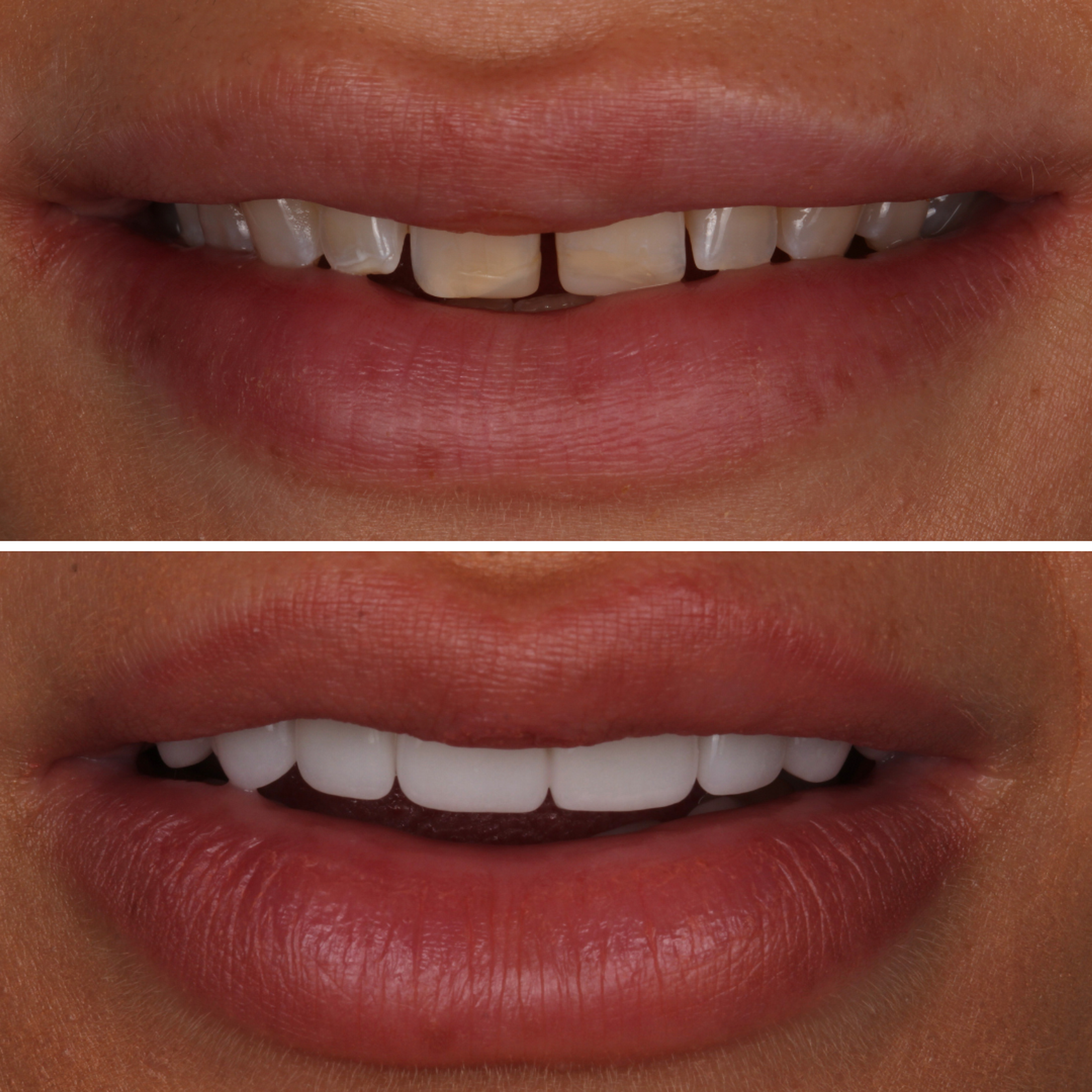
When you evaluate a clinic, ask for follow-up cases. Five years out. Ten years out. The clinics with confidence in their own work will be glad to show you.
The questions worth asking, a complete list
If you take only one practical thing from this article, take this list into your next consultation. The answers will tell you almost everything you need.
Portfolio and case volume:
- How many cosmetic cases do you do in a typical month? How many of those are veneers?
- Can I see fifty or more of your before-and-after cases, not just the highlight reel? I'd like to see cases similar to mine, including ones where the underlying anatomy was challenging.
- Can I see any cases at five-year or ten-year follow-up?
Specialty and credentials:
- What specialty training do you have in cosmetic and prosthodontic work beyond general dental school?
- Are you affiliated with a university dental school as faculty? Do you teach other dentists through continuing education?
- Have you published in peer-reviewed journals or lectured at major conferences on cosmetic dentistry?
The lab:
- Who specifically makes the porcelain for my case? Ceramists by name, not just the name of a lab company.
- Is the lab in-house? If not, how do you communicate with them, and how long does an adjustment take?
- Will I have a chance to evaluate the porcelain at the try-in stage and give feedback before it's bonded in?
Process and philosophy:
- What's the most conservative version of the treatment I'm asking for? Would you ever recommend doing less than I came in asking for?
- Will I have a real preview of the planned result, whether digital, physical, or with temporaries, before the final porcelain is made?
- How is my feedback during the temporary phase incorporated into the final design?
Peer signal:
- Do other dentists come to you for their own cosmetic treatment? How often does that happen?
- If something went wrong with the final result and I needed it redone, what would the conversation look like, and how would you handle it?
A clinician who can answer these clearly, without rehearsed lines, has nothing to hide. A clinician who deflects them or gives vague answers is telling you something else.
About Dr. Faraj Edher
We've kept this article general because the filters apply to any cosmetic dentist. For readers who want to know who is behind the practice that wrote it, the short version is below.
Dr. Faraj Edher is the prosthodontist behind Transcend Specialized Dentistry in downtown Vancouver and a Clinical Assistant Professor at the University of British Columbia. He holds the FRCD(C) credential — Fellow of the Royal College of Dentists of Canada in Prosthodontics — the recognized Canadian specialty designation for cosmetic and reconstructive dentistry.
He is the founder of BC Dental Study Club, the largest private dental continuing education institute in Canada, where thousands of dentists train each year on the same techniques used in his own practice. His clinical work is published in the Journal of Prosthodontics, the Journal of Prosthetic Dentistry, Dentistry Today, the Journal of Oral Sciences, and other peer-reviewed journals. He is a regular invited speaker at the major Canadian and U.S. dental conferences — the Pacific Dental Conference, Ontario Dental Association annual meetings, JDIQ in Quebec, the Greater New York Dental Meeting, the American College of Prosthodontists Annual Session, the Chicago Midwinter Meeting, and the Canadian Academy of Restorative Dentistry and Prosthodontics.
Treating other dentists is one of the most consistent patterns in our practice. Executives, public figures, performers, athletes, and patients travelling from across Canada, the United States, and occasionally Europe and the Middle East make up much of the rest. We treat them with the same workflow we treat every patient — a workflow built for high-stakes cases that have to be exactly right.
The bottom line
Beauty is subjective. The artist isn't. You can't fully evaluate your own cosmetic result until you're living with it, so the real decision is made earlier, when you choose the clinician. Choose based on the work you can actually see, the credentials you can verify, the peers who endorse them, and the consultation that earns your trust.
Find someone whose eye you trust. That's the whole article in one sentence.
If you'd like to start a conversation with us, we'd be glad to look at your smile, talk through your options, and tell you honestly what we think the right path is, including whether that path is with us or with someone else.