Periodontal Surgery
Gum Grafting
Receding gums expose roots, cause sensitivity, and put your teeth at risk over time. Our periodontist restores the tissue that protects your smile, using the technique best suited to your situation.
Why It Matters
Protecting Your Teeth
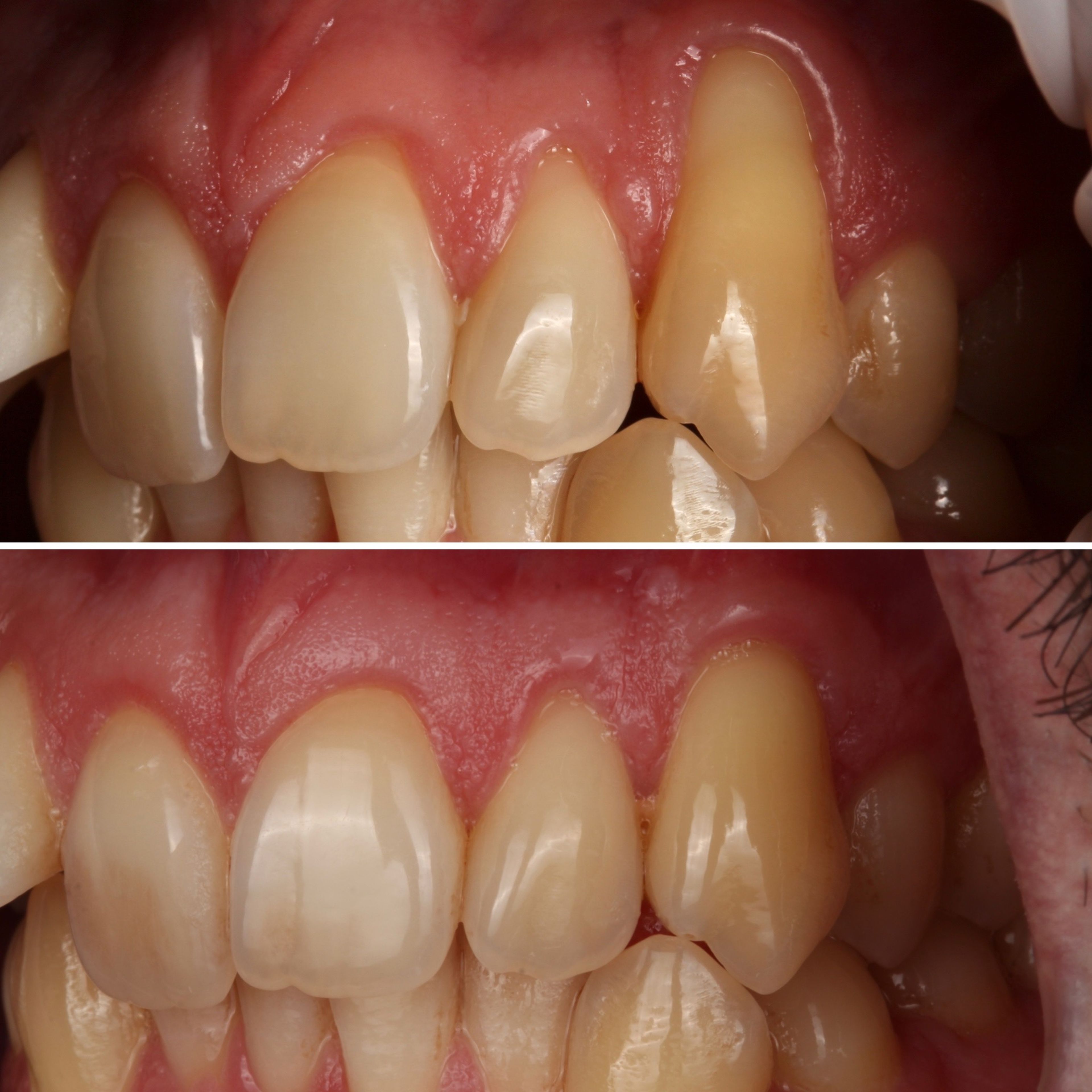
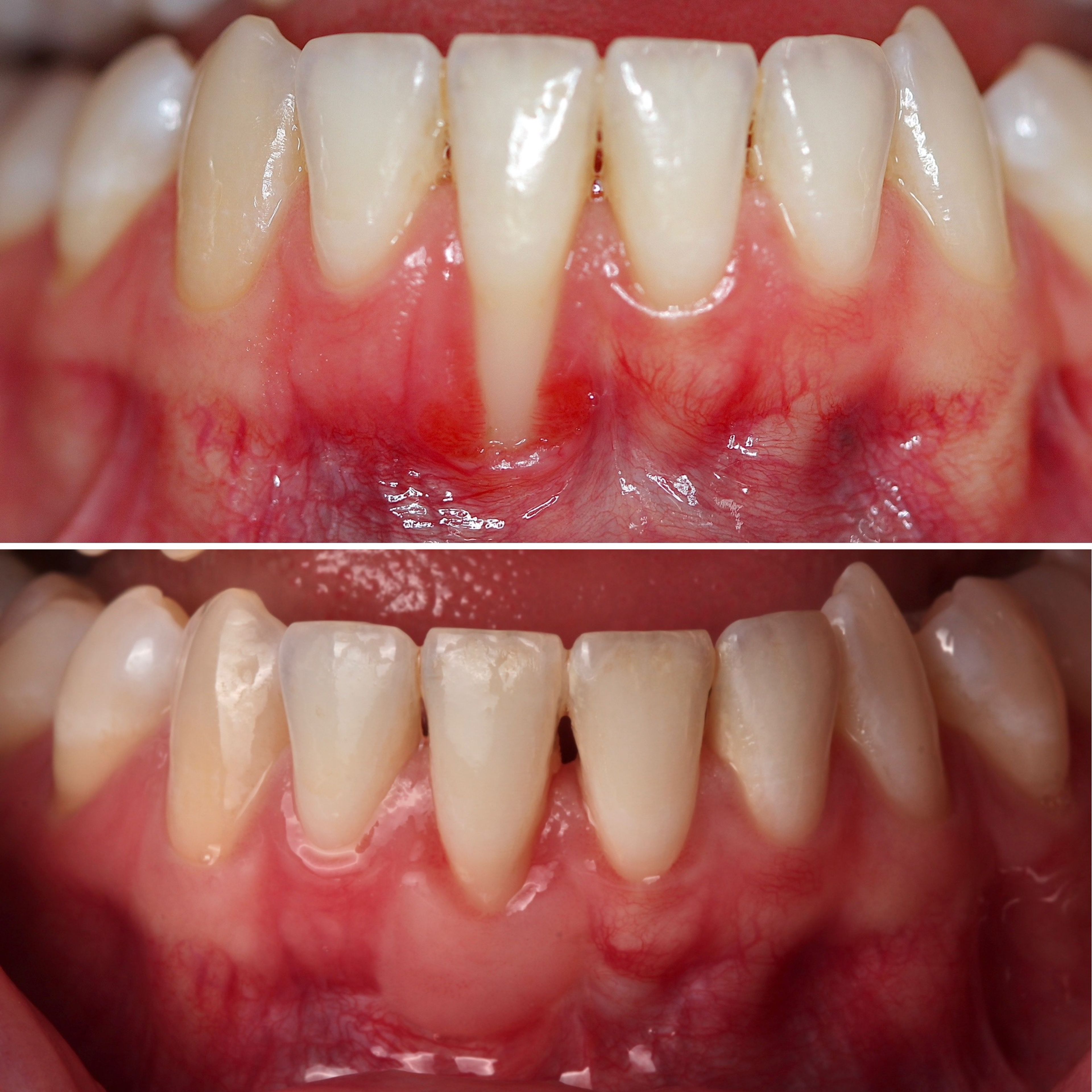
Gum recession exposes the root surfaces of your teeth, areas that aren't protected by enamel. This leads to sensitivity, increased risk of decay at the root, and further tissue loss over time. Left untreated, recession tends to progress.
Gum grafting restores the protective tissue around the affected teeth, covering exposed roots and re-establishing a stable band of gum tissue. The goal is to stop the progression, reduce sensitivity, and protect the long-term health of the tooth.
Our periodontist evaluates the depth and pattern of recession, the thickness of your existing tissue, and the underlying cause before recommending the approach that will give you the most stable, lasting result.
Types of Grafts
The Right Graft for Your Case
Our periodontist selects the grafting technique and tissue source based on the location, depth of recession, and what will produce the most stable, lasting coverage.
Connective Tissue Graft (CTG)
The most common approach. A thin layer of tissue is taken from beneath the surface of the palate and placed over the exposed root. It provides excellent root coverage and integrates well with the surrounding tissue for a natural, stable result.
Free Gingival Graft (FGG)
Tissue is taken directly from the surface of the palate and placed at the recession site. This technique is particularly useful when the goal is to increase the width and thickness of the gum tissue around a tooth, adding a protective band of tissue that wasn't there before.
Allograft (Donor Tissue)
In some cases, processed donor tissue can be used instead of tissue from your own palate. This avoids a second surgical site, which can mean a more comfortable recovery. Our periodontist recommends this when it's appropriate for your case and expected to achieve a comparable result.
Common Questions
Good to Know
What causes gum recession?
Aggressive brushing, gum disease, genetics, teeth grinding, thin tissue, or even past orthodontic treatment. Often it's a combination. Understanding the cause helps us treat it and prevent it from recurring.
Is gum grafting painful?
The procedure is done under local anesthesia, so you won't feel pain during treatment. Afterward, most patients experience mild to moderate discomfort for a few days, manageable with medication. Minimally invasive techniques tend to have a more comfortable recovery.
How long is the recovery?
Most patients return to normal activities within a few days. Initial healing takes about two weeks, and the tissue continues to mature over several months. We provide detailed post-operative instructions and stay in close contact during your recovery.
Will the recession come back?
A well-performed graft provides a stable, long-term result. We also address the underlying cause, whether that's brushing technique, grinding, or gum disease, to minimize the chance of recurrence.
Do I have to use tissue from my own palate?
Not always. Donor tissue (allograft) can be used in some cases, avoiding a second surgical site. Our periodontist recommends the tissue source that will give you the best result based on your specific recession.
How many teeth can be treated at once?
It depends on the severity and location. In some cases, multiple teeth in the same area can be treated in a single procedure. Our periodontist will assess your situation and plan accordingly.
Restore Your Gum Line
Whether it's sensitivity, aesthetics, or protecting your teeth long-term, it starts with a specialist evaluation.